Showing posts with label 2007. Show all posts

Saturday, March 20, 2010

Pascale Machaalani - Akhed Aqli

Pascale Machaalani's sultry voice can make any song sound good, but unlike her 2006 album Akbar Kidba Bi Hayati, she throws diversity out the window here. Unlike many singers who have relied on a particular musician or team for their hits, Pascale's hits have come from many of the top musicians. However Melhem Bou Shdid, who usually used to oversee the arrangement of her albums, composed most of the songs here. Though not a stranger to composing hits, being the man behind Shou Amaltellak Ana? and Sa'beh Eish Men Dounak, his style gets repetitive fast. The album opens with Am Yemda El Wa't, a rich ballad which despite its length remains a crowd pleaser. The title song, a cover of the hit Turkish song Adresi Biliyorsun by Nalan. The arrangement is given a refreshing update by Aytekin Kurt, but the section before the chorus is removed completely. Ba'adetna El Masafeh is a mellow ballad, with a relatively catchy tune and typical but enjoyable arrangement. Awlak Ya Albi, composed by Yehya El Hassan, is in the same vein with addition of a ney. Wainak Ya Ensan, though a beautiful song, has limited appeal as a song written about the 2006 Lebanese War. Tghayart Alayeh, which was the first single, is another warm ballad, despite the sometimes outdated feel about the music. Ana Lamma Shoftak, composed by Tamer Ashour, is by no means bad but an unexciting ballad. Ardak Hawn changes the pace with a short mawal and an interesting song about the issue of emigration. Ah Ya Layali, a shot at Egyptian sha'bi, is catchier than Khallik Fi Halak, but one can't help but feel that someone with Pascale's history can do so much better.

Image and video hosting by TinyPic

1. Am Yemda El Wa't
2. Akhed Aqli
3. Ba'adetna El Masafeh
4. Awlak Ya Albi
5. Wainak Ya Ensan
6. Khallik Fi Halak
7. Tghayart Alayeh
8. Ana Lamma Shoftak
9. Ardak Hawn
10. Ah Ya Layali

256 Kbps + Covers

Sunday, January 24, 2010

Abo Bakr Salem - Ahtefel Bel Jarh

Love or hate him, Abo Bakr Salem has left his mark on the music of the Gulf. It is largely thanks to him that Yemenite music is still alive and well on the scene. Though the material here is all-new, the Egyptian chorus and orchestra, including Amir Abdel Majid and Tarek Aakef, is still here, and harkens back to the days when Arab singers all traveled to Cairo for the state-of-the-art studios. Abo Bakr is still as soulful as ever with his truly unique style, changing his tone and commenting for dramatic effect. The listener loses themselves in the oud, the ney, and the deep strings that accompany each song. The lyrics are as beautiful as ever too, with songs of pure affection like Moghram Sababa, of loss like Ahtefel Bel Jarh, or of peace like Han Wagt El Lega, which urges Arab nations to forget previous wrongs and come together, using estranged lovers as a metaphor. A great composer, lyricist, and singer, Abo Bakr Salem is unmatched, even when scores of singers now adhere to his school of music.

Image and video hosting by TinyPic

1. Ahtefel Bel Jarh
2. Moghram Sababa
3. Samir El Ein
4. Ghessin El Ban
5. Ya Badr
6. Gesher Men El Mouz
7. Han Wagt El Lega

256 Kbps + Covers

Monday, December 22, 2008

Moin Shraif - Albak Tayeb

Moin Shraif's excellent 2007 album, perhaps due to the lackluster title song, was quickly forgotten. It's undeniable, however, how popular the singles As'ab Kelmeh and Rsamtak later became. Moin's album consists of 8 tracks, diverse in terms of both composition and arrangement. Nicolas Saade Nakhle's compositions were extremely well-received, but the overly repetitive title song is quickly overshadowed by Rsamtak, and the electrifying arrangement done by Hadi Sharara. Rawad Raad composes another two stellar songs on this album; a great ballad, As'ab Kelmeh, and Addait El Nejmat, a great dabke song arranged beautifully by Bilal El Zein. Mahmoud Khayami's compositions, El Omr Kello and Yama Alou Fik, are the least interesting songs, but listenable still thanks to Adel Aayesh's rich arrangement. The last two tracks are composed by Samir Sfair and arranged by Tarek Aakef, and are both great ballads that harken back to the duo's 1990s work.

Image Hosted by ImageShack.us

1. Albak Tayeb
2. As'ab Kelmeh
3. El Omr Kello
4. Yama Alou Fik
5. Rsamtak
6. Addait El Nejmat
7. Kel El Haq Alaik
8. El Moshkela Ennak Habibi

Download Here
256 Kbps + Covers

Tuesday, October 21, 2008

Shams - Shams (2007)

After her 2005 album, Mudhahara Nesa'iya (Women's Rebellion), Shams stayed out of the public eye for a long period of time. The news of the termination of her Rotana contract made many think that her career could only be headed downwards. She returned however, in 2007, with a strong pan-Arab promotional campaign and a controversial video that satirized the American politics in the Middle East, Ahlan Ezayak. Now signed on as Surpr!se Entertainment first artist, Shams' return couldn't have been stronger. Her new album contained two (very different) discs, the first in the Khaliji/Gulf and Iraqi dialects, and the second in the Egyptian dialect.

Photobucket

Abdelqader El Hedhoud composed the majority of the first disc, with the exception of tracks 3, 5, and 6. The album opens with Million, a lighthearted and comedic song arranged by Tarek Aakef, who gives the song the strong percussion he likes to use on his Khaliji work. Tarek Aakef arranges the most traditional-sounding songs on the album, Million, Ba'ad Omri and La Tetawel Lesanek included. La Tgoul Ma Aridek, composed by Samer Rashed and arranged by Walid Fayed, is the album's sole Iraqi song. Nadhra, which borders on the noisy, is given the Egyptian maksoum treatment by Dr. Ashraf Abdo. The remaining songs have a very different sound, the arrangers, Mohamed Mostafa, Medhat Khamis, and Karim Abdelwahab, are from Egypt, while Ismail T. Black hails from Turkey. Mohamed Mostafa arranged Afia Alay and the hit Loha Me'aqeda, both ballads that he did an excellent job on, though he took a more traditional approach with the former. Tefl, also arranged by Dr. Abdo, is a mix of both oriental instruments and western beats, and very different from Nadhra (in a good way). Karim Abdelwahab does his best work on ballads, and Halat Ferag is no exception, because he makes sure that a slow song doesn't have to be a boring one. The first disc bows out with Qessa Aalamiya, which İsmail Tunçbilek arranges, using his signature strings (which you can hear on Al Hob Wal Wafa', as well as Nawal's El Shoug Jabek and Ma'goula Tensani) combined with clarinets and a purely Iraqi beat.

Photobucket

1. Million
2. Loha Me'aqeda
3. Ba'ad Omri
4. Nadhra
5. La Tgoul Ma Aridek
6. Sema'na
7. La Tetawel Lesanak
8. Afia Alay
9. Tefl
10. Halat Ferag
11. Qessa Aalamiya

Disc 1
256 Kbps + Covers

The majority of the songs on the second disc of Shams' album tend to either be comedic (and subsequently noisy at times) or beautifully sung and composed ballads. Shams' pronounciation is excellent for a Kuwaiti native, though at times her voice does falter. Mohamed Diya'eddin, who is credited with much of Asalah's early success, composed and arranged five songs on this disc. Mohamed Rahim's composition, Ahlan Ezayak, opens the second disc on a lighthearded note also. Ana Arfa is not as interesting, but it's followed by the album's second single, Ghammadt Eineik, which Shams shot a meaningful video for, depicting the life of a person riddled with a drug addiction. Wakhed Balak and Neb'ed Youmein are musically neutral, maksoum songs, with nothing interesting or off-putting. Moush Eshq La, by Mohamed Diya'deddin, has a beautiful, traditional orchestra-style feel to the music. Za'lan and Eih Dah Aslo, an annoying shot at hip-hop, are the album's low points, with not much in terms of lyrics or music to appreciate. However, listening to the great work done on songs like Albi Be Youga'ni (composed by Mohamed Rifai, arranged by Karim Abdelwahab) and Lazem Asibak (composed by Walid Saad, arranged by Mohamed Mostafa) is gratifying enough to make you forget the not so stellar songs. Shams just released a video for Ta'ta'ah (Stutters), the love-it or hate-it song of the season, with mixed reviews. Some simply hate the shrieking Shams does, others love the comedic lyrics and the funny video which portrays Shams as a corrupt judge in what appears to be a red devil suit. As always, Shams also injects some politics under the surface of the video.

Photobucket

1. Ahlan Ezayak
2. Ana Arfa
3. Ghammadt Eineik
4. Wakhed Balak
5. El Wa't El Mounaseb
6. Ta'ta'ah
7. Albi Be Youga'ni
8. Za'lan
9. Moush Eshq La
10. Neb'ed Youmein
11. Lazem Asibak
12. Eih Dah Aslo

Disc 2
256 Kbps + Covers

Saturday, October 11, 2008

Asalah - Sawaha Galbi

After the massive success of Awgat in 2004, Asalah promised another full-length Khaliji/Gulf dialect album. Three years on, and after the release of Aadi and Hayati, she released Sawaha Galbi in the summer of 2007. Despite a luckluster promotional campaign, and the fact Asalah didn't shoot a single video for the album, it was extremely well-received amongst its target audience. Unlike the very traditional Awgat, Sawaha Galbi modernizes and mixes in new styles with many of the songs. Asalah also worked with more female poets, and even a new female Saudi composer, Leil. The album opens with the most popular song, La Tekhaf, which mixes traditional beats and strings with an R&B feel. Tabi Tetrekni starts off like a jazz song, and transitions into the traditional beats, maintaining a slow pace throughout. Sawaha Galbi is the most unique song on the album, with rebab solos and composition and percussion that is very foreign to the ears of those who do not regularly listen to Khaliji music. Omnia is duller than the preceding tracks, but is listenable with nothing overly exciting or offensive. Kelmat Sheker is a poem that expresses a girl's love for her father, and so the music is secondary to the lyrics. Egreb Gerib and Dirat El Gherba (written/composed by the same team behind Rawweh Ou Rouh) are both quintessential Emirati songs, composed by Fayez El Sa'id, who is nominated for an MTV EMA this year. Talabtek takes a completely different tone; a ballad with powerful arrangement and the kind of composition that allows Asalah to truly put her vocals at work and shine. The album closes with another ballad, Shomoukh Ezi, which is written and composed by female Saudi poet Mo'taza and composer Leil, and arranged by Egyptian arranger Medhat Khamis. Asalah proved once again her mastery of Khaliji music, and how good music succeeds without being propped up by a music video or massive ad campaign.

Photobucket

1. La Tekhaf
2. Tabi Tetrekni
3. Sawaha Galbi
4. Omnia
5. Kelmet Sheker
6. Egreb Gerib
7. Dirat El Gherba
8. Talabtek
9. Shomoukh Ezi

Download Here
256 Kbps + Covers

Monday, September 8, 2008

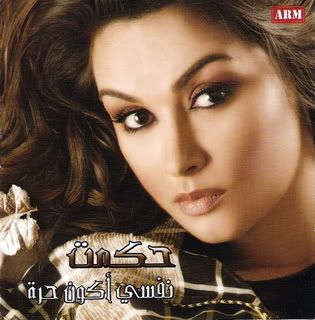
Hekmat - Nefsi Akoun Horra

Moroccan singer Hekmat launched her musical career with a hauntingly beautiful song composed and written by Marwan Khoury, and arranged by Claude Chalhoub. Hawel (Try) was accompanied by a simplistic video filmed in Morocco, and directed by Alain Charles Beau. Her talent, and refusal to use her body to sell CDs, earned her comparisons to fellow Moroccan chanteuse Jannat. Like Jannat, Hekmat sings primarily in the Egyptian dialect, with the exception of Hawel. However, Hekmat's voice is more mature and diverse. Ma Basaddaq Had Yegib Sirtak and Bahebbak are maksoum songs, the latter mixing in some pop beats while the former sticks with more traditional instruments. The second single, Gharib El Hal, starts off as a pop song and then mixes in Arabic percussion, mizmar, and rabab. The result is a relaxed and very enjoyable song. The mellow Eideik Khayna is a rarity, it is composed by Marwan Khoury but written by Egyptian lyricist Baha'eddine Mohamed and arranged by Wissam Moumtaz (also Egyptian). Ettafa'na Aal Ekhlass (We Agreed on Fidelity) has more upbeat music, but Hekmat's melancholy voice delivers the sad message in the lyrics. Nefsi Akoun Horra (I Want to be Free) suffers from slightly cheesy arrangement, but the lyrics, which have nothing to do with the plight of love, are a welcome change in the album's lyrical style. The slow Hewar and Farhana are the duller songs of the album, but not necessarily bad songs either. Rumors of Hekmat's retirement from music circulated late last year, however Hekmat, who was never in the public eye much, has neither confirmed nor refuted the rumors.

Photobucket

1. Ma Basaddaq Had Yegib Sirtak
2. Hewar
3. Gharib El Hal
4. Eideik Khayna
5. Farhana
6. Bahebbak
7. Ettafa'na Aal Ekhlass
8. Nefsi Akoun Horra
9. Hawel (Bonus)

Download Here
256 Kbps + Covers

Saturday, July 26, 2008

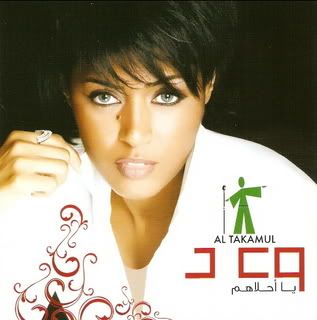
Waed - Ya Ahlahom

Saudi vocalist Waed's latest album is a great blend of the best that Arabic music has to offer. She explores Lebanese pop, Khaliji ballads, and Egyptian songs all in one album. Musical stars like Tarek Abou Jaoudeh, Hadi Charara, Riyad El Hamshari, Nicolas Saade Nakhle, and even Ramy Ayach, are all present in this colorful album.


1. Inta Hayati
2. Mani Le'ba
3. Ra'shet Albi
4. Hallaftak
5. Ala Min
6. Ya Ahlahom
7. Traktak
8. Ma Teftekersh
9. Sanam Jaamed
10. Eb'ed Anni
11. Inta
12. Khan

Download Here
256 Kbps + Covers