Showing posts with label Asalah. Show all posts

Monday, August 2, 2010

Asalah - Qanoun Keifek

Two years since her last release, and after a relentless spin on the rumor mill, Asalah's Qanoun Keifek has finally arrived. The album is composed by Saudi composer Sahm, with the exception of Ya Rasi El Ta'ab (Fayez El Sa'id) and Sem Ou Asal (Leil), which in itself is a risk. Picking up where Sawaha Galbi left off, Qanoun Keifek opens with a song that needs some getting used to. A dramatic opening, a dance-oriented chorus, and powerful lyrics of a woman's frustration. The instrumentation is strange at first but beautiful, with a tango-esque solo violin and piano alongside a rebab and ney, all to the beat of Iraqi percussion. Ila Mata slows things down, but the shock value does not subside with Asalah braving a western-style ballad, and her voice taking an otherwise simple song to new heights. Shef Ether opens with an almost Enya-style melancholy tinged with oriental strings, and shows Asalah exploring areas she normally would not: being the other woman. After successfully taking the plunge into jazz with Hayati in 2006, Asalah tries her hand at some swing with Bas Degiga. A mix of frustration and mischief, the song is another winner. Shakhs Yehtam, in the vein of La Tekhaf, is the album's feel-good track and makes up in sweet lyrics for the simplicity of the song. Sharha Ou Atab is the sole dance song, and the style could be almost be interchangeable with a Tunisian song, pointing to the versatile Issam Sharayti's roots. The album winds down with three powerful ballads, beginning with the classically-influenced Te'abt Ardhik, which is another testament to Asalah's voice. The previously leaked Ya Rasi El Ta'ab is slightly reworked, but still opens with a piano and harp as a hopelessly emotional ballad and transforms into a faster-paced Emirati song accented with sharp strings. Sem Ou Asal is also polished and a verse shorter. However, the fusion of an excellent Khaliji ballad, complete with flowing strings and heavy percussion, to a jazzy saxophone and electric guitar still manages to leave you in awe.


1. Qanoun Keifek
2. Ila Mata
3. Shef Ether
4. Bas Degiga
5. Shakhs Yehtam
6. Sharha Ou Atab
7. Te'abt Ardhik
8. Ya Rasi El Ta'ab
9. Sem Ou Asal

256 Kbps + Covers

Sunday, November 16, 2008

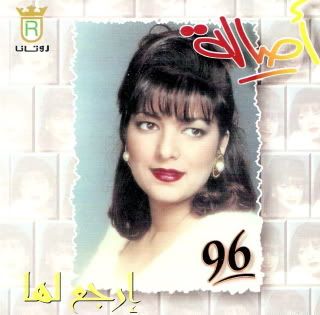
Asalah - Erga' Laha

Asalah's 1996 album is a mix of both light Egyptian pop songs, like Heya Keda and Khodni Ma'ak (Meshwar Hawak), and heavier, lengthy tarab songs like Erga' Laha and her popular rendition of Alli Gara. The album is composed by Mohamed Diya', Helmi Bakr, Amir Abdel Majid, and the great Sayed Mekkawi.

IPB Image

1. Heya Keda
2. Shi' Yerga'lak
3. Alli Gara
4. Katabtak
5. Khodni Ma'ak (Meshwar Hawak)
6. Erga' Laha

Download Here
256 Kbps + Covers

Tuesday, October 28, 2008

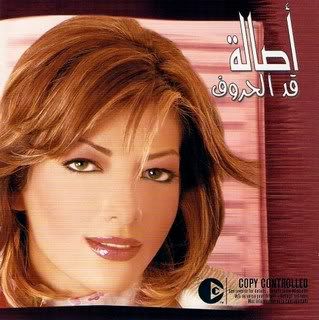
Asalah - Ad El Horouf

Asalah's 2003 album was the last one in which she mixed Khaliji, Syrian, and Egyptian songs on the same CD. Two of the biggest hits, Misheit Senin and A'taz Bek, are by Saudi poet Al Nasser and Kuwaiti composer Dr. Ya'coub Al Khubaizi. Though Al Nasser works mainly with singers from the Gulf, he has written several songs for Magida el Roumi in classical/written Arabic, such as Ouhibbouka Wa Ba'd and Al Hob Wal Wafa', but he wrote Misheit Senin in the Egyptian dialect. Khalli Hal Tabeq Mastour, composed by Syrian singer Elias Karam, is a humorous song in which she tells her lover not to bring up fidelity, because "he who lives in a glass house shouldn't throw stones at others". Though some songs suffer from somewhat archaic arrangement, and Asalah seems to get alittle overenthusiastic on others, like Tasawar and Mali, there are enough good songs on this album to merit a thorough listen.

Photobucket

1. Tasawar
2. Damirak Sehi
3. Misheit Senin
4. Mali
5. A'taz Bek
6. Ad El Horouf
7. Khalli Hal Tabeq Mastour
8. Lawen Omri
9. Ayez El Haq
10. Aashet El Asami

Download Here
256 Kbps + Covers

Monday, October 20, 2008

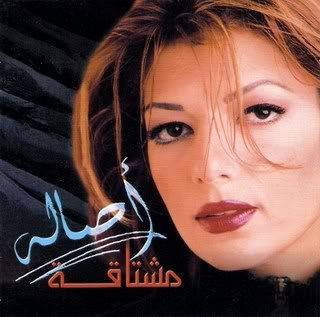
Asalah - Moushta'a

Asalah's 2002 album was, musically, a 180 degree shift from its predecessor, Ya Akhi Es'al. Instead of Dr. Al Khubaizi and Tarek Aakef, Mohamed Diya'eddin and Walid Saad anchor this album. Also included are Asalah's first and only collaborations with Samir Sfair and Ziad Boutros. Samir Sfair's mellow E'tef Habibi became the second single (after Ayeshni Sawani). Ziad Boutros' melancholic Mish Be Mwa'idi, Asalah's first Lebanese song, has much more substance in terms of lyrics, thanks to Nabil Abou Abdo. Walid Saad's songs are, as they usually are, ballads with lyrics that speak of lost love. However, the upbeat Mo'gaba Fik is an exception and a great change of pace for Walid. It's no secret that, at least pre-2006, ballads are what Asalah always does best. The both sad and empowering Ma Ba'ash Ana, composed by Mohamed Diya', is one of Asalah's most well-known songs to this day.

Photobucket

1. Ayeshni Sawani
2. Ya Eini
3. Mokhade'
4. E'tef Habibi
5. Mish Be Mwa'idi
6. Mo'gaba Fik
7. Fouq Men Wahmak
8. Ma Ba'ash Ana

Download Here
256 Kbps + Covers

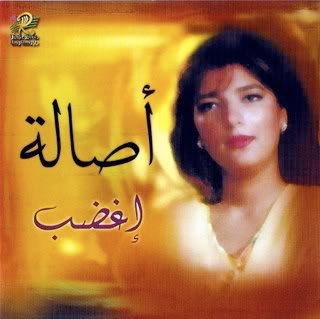
Asalah - Ighdab

Ighdab marked Asalah's first (and only) collaboration with the great Syrian poet Nizar Qabbani. The title song, which is composed by Helmi Bakr, is a lengthy qasida, and stylistically very different than the first four tracks, which are composed by Mohamed Diya'eddin. The poem talks of an angry lover, and how his anger and attempts to hurt her will not make her falter, "for you are like a child, we love children no matter how they hurt us... And without waves, there would not be seas." Law Alf Ahebbak and Batthadda Eyounak are typical 1990s Egyptian maksoum songs with a synth, fast percussion, accordion, a bass line and little in the way of musical innovation. Magrouh Sout El Sa'at and Ma Tes'alnish are both slower, Egyptian ballads.

Photobucket

1. Law Alf Ahebbak
2. Ma Tes'alnish
3. Batthadda Eyounak
4. Magrouh Sout El Sa'at
5. Ighdab

Download Here
256 Kbps + Covers

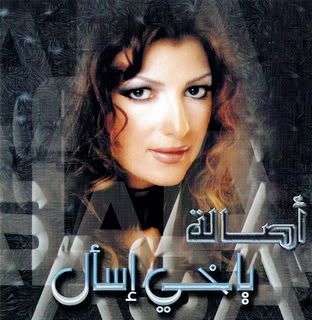
Asalah - Ya Akhi Es'al

Asalah's forays into the Khaliji genre began in the 1990s, but Ya Akhi Es'al is arguably her first truly successful Khaliji album. She worked with some of the top composers, such as Dr. Yacoub Al Khubaizi (Leih El Ghorour, Samehna), who composed some of her most successful later work too (Misheit Senin, Afwan) as well as Dina Hayek's summer 2007 hit, Jarreb El Ghira. The title track, Ya Akhi Es'al, is composed by Tarek Mohamed, the man behind so many of Nawal's recent hits, such as Inta Tayyeb, Tebgha El Sedeg, and Agsa Kalami. The songs tend to be traditional, however some songs like Leih El Ghorour and Samehna incorporate piano and bouzouk also.

Photobucket

1. Leih El Ghorour
2. Samehna
3. Rajeitak
4. El Ghira
5. Ya Akhi Es'al
6. Khalas
7. Es'al Aleina
8. Asalli Nafsi

Download Here
256 Kbps + Covers

Monday, October 13, 2008

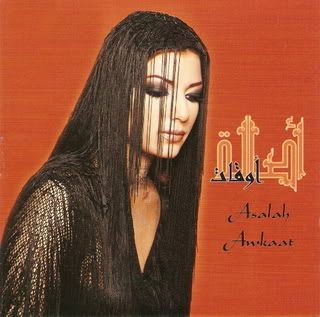
Asalah - Awgat

Though Asalah had sung in the Gulf/Khaliji dialect numerous times before, she never experienced success with it at the scale of Awgat in 2004. Unlike her 2007 effort, the approach she took was extremely traditional, with the most foreign instruments in most of the songs being the odd synth and the focus in the majority of the songs being on the poetry. The album opens with the upbeat Tawwek Ala Bali and the hit Meta Ashoufek. Rawweh Ou Rouh is in Fayez El Sa'id's usual style, but stretches Asalah's vocals much more than Tawwek Ala Bali. Ya'coub Al Khubaizi's Ma Tewaqa't and Afwan, take a completely different route partly thanks to Egyptian arranger Amr Abdulaziz, who even incorporated clarinet into Afwan. Gemarhom Kellehom is an upbeat song about a jealous lover, that also became a successful single. Remsh El Ghala and La Salam pick up the pace again with faster and stronger percussion, though with a different feel than the first tracks on the album. Terfa' Jebinek, composed by Abdallah El Go'oud and arranged by Tarek Aakef, is slightly more relaxed but works in a lot more synth, in the arranger's signature style. Ma Gedar, another Khubaizi composition, starts like a slow pop song and then jumps into the traditional Khaliji beats. Awgat, composed by Mohamed Abdu and arranged by his Egyptian protégé Walid El Fayed, takes a completely different tone and feels like one of Abdu's own grand classics when it transitions from one style to another. Sadeq El Sha'er's beautiful Yes'ed Sabahak, a fifteen-minute ballad in the traditional Arabic tarab style, closes the album in the best way possible.

Photobucket

1. Tawwek Ala Bali
2. Meta Ashoufek
3. Rawweh Ou Rouh
4. Ma Tewaqa't
5. Gemarhom Kellehom
6. Afwan
7. Remsh El Ghala
8. La Salam
9. Terfa' Jebinek
10. Ma Gedar
11. Awgat
12. Yes'ed Sabahak

Download Here
256 Kbps + Covers

Saturday, October 11, 2008

Asalah - Sawaha Galbi

After the massive success of Awgat in 2004, Asalah promised another full-length Khaliji/Gulf dialect album. Three years on, and after the release of Aadi and Hayati, she released Sawaha Galbi in the summer of 2007. Despite a luckluster promotional campaign, and the fact Asalah didn't shoot a single video for the album, it was extremely well-received amongst its target audience. Unlike the very traditional Awgat, Sawaha Galbi modernizes and mixes in new styles with many of the songs. Asalah also worked with more female poets, and even a new female Saudi composer, Leil. The album opens with the most popular song, La Tekhaf, which mixes traditional beats and strings with an R&B feel. Tabi Tetrekni starts off like a jazz song, and transitions into the traditional beats, maintaining a slow pace throughout. Sawaha Galbi is the most unique song on the album, with rebab solos and composition and percussion that is very foreign to the ears of those who do not regularly listen to Khaliji music. Omnia is duller than the preceding tracks, but is listenable with nothing overly exciting or offensive. Kelmat Sheker is a poem that expresses a girl's love for her father, and so the music is secondary to the lyrics. Egreb Gerib and Dirat El Gherba (written/composed by the same team behind Rawweh Ou Rouh) are both quintessential Emirati songs, composed by Fayez El Sa'id, who is nominated for an MTV EMA this year. Talabtek takes a completely different tone; a ballad with powerful arrangement and the kind of composition that allows Asalah to truly put her vocals at work and shine. The album closes with another ballad, Shomoukh Ezi, which is written and composed by female Saudi poet Mo'taza and composer Leil, and arranged by Egyptian arranger Medhat Khamis. Asalah proved once again her mastery of Khaliji music, and how good music succeeds without being propped up by a music video or massive ad campaign.

Photobucket

1. La Tekhaf
2. Tabi Tetrekni
3. Sawaha Galbi
4. Omnia
5. Kelmet Sheker
6. Egreb Gerib
7. Dirat El Gherba
8. Talabtek
9. Shomoukh Ezi

Download Here
256 Kbps + Covers

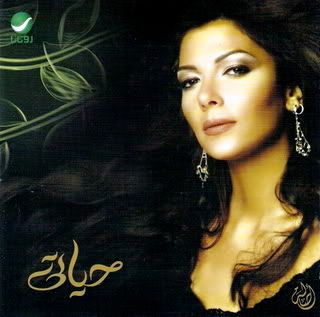
Asalah - Hayati

After settling an ugly divorce, finally quitting smoking, and remarrying, Asalah released Hayati (My Life) in 2006. Hayati was, and remains, one of Asalah's most diverse albums. At its release, Asalah stated that each song she chose described a stage in her life. The first single, Aktar, was an instant hit, and was constantly played on TV, radio, and she was requested to sing it at every TV appearance or concert. Now one of her defining hits, Aktar was even remade by Turkish singer Jale Parıltı. The song was composed by Tamer Ali and arranged by Tamim, both of whom worked on Elissa's 2006 hit Bastannak. Arod Leih is Asalah's second collaboration with Amr Mostafa, and she made the dramatic ballad her second single. Ana Moush Sa'ba Aleik and Nassini Bik are stylistically similar, upbeat love songs. Asalah shot Bein Eideik on the beach with her husband, and made the song, which was composed by Ramy Sabry, a look at how she enjoyed her new life with her husband. Wehna Sawa, her first Algerian song, is composed by Mounir El Jazairi, the man behind Nawal's hit Tammen Galbak. Wallahi Ma Tahaddi (by Walid Saad & Karim Abdelwahab) was originally intended for Tamer Hosny, whose version was leaked, but ended up becoming Asalah's, and she more than did song justice. The album's sole Lebanese song, Alamtni (by Marwan Khoury & Hadi Sharara), is a slow, malancholic song which met with success for Asalah, who had not sung a Lebanese song since 2001. The title song was Asalah's first attempt at jazz, and combined with the lyrics, which spoke of her newfound liberation, it was well-received as the album's final single. The album won Asalah a Murex D'Or in 2007 for Best Female Arab Singer.

Photobucket

1. Aktar
2. Ana Moush Sa'ba Aleik
3. Arod Leih
4. Alamtni
5. Hayati
6. Wehna Sawa
7. Bein Eideik
8. Nassini Bik
9. Wallahi Ma Tahaddi

Download Here
256 Kbps + Covers

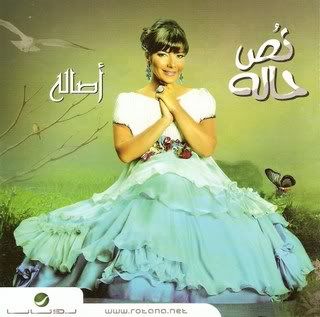
Asalah - Noss Hala

After the massive success of Hayati (2006) and Sawaha Galbi (2007), Asalah returned this year with another highly-anticipated album. Many new fans raved about the change of style, but diehard fans (like this listener) are underwhelmed to say the least. The CD opens with its first single, Wala Dari, an upbeat, already successful pop song that melds oud with Nsync-esque beats. Sadly, the album declines from there. Kan Wahm is a slow ballad, but not the good oriental kind that Asalah always hits a homerun with. Instead, the sleepy chorus brings the Spice Girls' Too Much to mind, which is definitely not a good thing. Ah Men Ainah picks up the pace, letting Asalah stretch her vocal muscles a bit, and passes with uninteresting arrangement. Etfarrag Ala Nafsak is the sort of song Asalah excels in, but forcing bongos and triangles on such an oriental song is ridiculous. Ba'ah Tabi'i Alaya gets more of the mediocre arrangement, and adds awkward percussion too, but the album picks up after this one. Aw'at is composed by Ramy Sabry, who is on Tarek Alarian's label, but it gets much better treatment than its stablemates, with more interesting strings and less awkwardness. Yesmahouli El Kel, penned by Siham Sha'sha' and composed by Jean-Marie Riachi, was talked about months before it's release and has already been queued as the next single. The song, like all of the songs Siham writes, is lyrically-focused, but Riachi manages to hold his own with upbeat violins, kanun, and ney. As she has done for the past decade, Asalah explores a new style here, after succeeding with jazz in 2006. Noss Hala is classically-influenced, and feels like a grand film or Broadway score. With so many regulars absent, it isn't hard to see how Asalah went wrong with this album. Closing with two great songs is hardly a victory, but Asalah never completely disappoints, and there's always next year.

Photobucket

1. Wala Dari
2. Kan Wahm
3. Ah Men Ainah
4. Etfarrag Ala Nafsak
5. Ba'ah Tabi'i Alaya
6. Aw'at
7. Yesmahouli El Kel
8. Noss Hala

Download Here
256 Kbps + Covers

Thursday, September 18, 2008

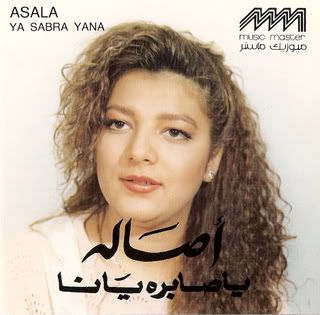
Asalah - Ya Sabra Yana

Though Asalah had performed in Syria with her father, the great Mostafa Nasri, and garnered a small following there, she was still unknown to the rest of the Arab World. After a period of mourning, Asalah finally returned to the music scene. Asalah's debut album Law Ta'rafouh was a huge hit that launched her into the Egyptian music scene in 1991. The album was then released again in 1992 under the title of Ya Sabra Yana, which had succeeded even more than the original title song. The four tracks are lengthy tarab songs with the a great traditional feel. The lyrics are mostly sorrowful songs of love. Almost a decade after their initial release, these songs are still remembered and Asalah sings Samehtak Ketir in particular at many of her concerts.

Photobucket

1. Ya Sabra Yana
2. Law Ta'rafou
3. Hat Albi
4. Samehtak Ketir

Download Here
256 Kbps + Covers