Showing posts with label Classics. Show all posts

Friday, September 10, 2010

Ziad Rahbani - Houdou Nisbi

The many faces of Ziad Rahbani are exhibited in the diversity of his work. But whether a hopeless romantic or a scathing critic, he brings an air of 1980s Beirut with him on Houdou Nisbi. The album is a tribute to Ziad's love for jazz, but like his complex personality, it is full of influences from both east and west. The album opens with Bala Wala Chi, a heartfelt ballad sung by longtime friend Sami Hawat. The title song is a melancholic, jazzy number accented with Ziad's signature bouzouk, and is a great example of "oriental" jazz. Nafs El Shaghli brings us more oriental jazz, but this time accented with the beautiful voices of Monica and Sami Hawat. The oddball Yalla Kichou Barra, unmistakably Ziad Rahbani, invites the electric guitar and oriental percussion in. Ma Tfil is a lighter track, with uplifting strings, and again sung by Sami Hawat, although the chorus creates does a great job setting the ambiance. The album then shifts into a more bossa nova-style mood with an instrumental piece, Bil Nisbi La Boukra Shou?, interestingly joined by a kawala. Bisaraha is the notorious song Ziad wrote about his relationship with now ex-wife Dalal Karam, and he is joined again by Sami Hawat on vocals. Bain El Khamsa Wel Sab'a is another relaxed instrumental piece. Rouh Khabbir is a mellow cover of The Crusaders' Soul Shadows, and fits perfectly in the album. Monica lends her voice to another, more upbeat instrumental in Min Kil Bid, and rounds up the album with a great ballad in Khalas. The rightly named Final, is a a hauntingly beautiful guitar interlude that closes the album.


1. Bala Wala Chi
2. Houdou Nisbi
3. Nafs El Shaghli
4. Yalla Kichou Barra
5. Ma Tfil
6. Bil Nisbi La Boukra Shou?
7. Bisaraha
8. Bain El Khamsa Wel Sab'a
9. Rouh Khabbir
10. Min Kil Bid
11. Khalas
12. Final

256 Kbps + Covers

And Eid Mubarak to all visitors, sorry for the hiatus!

Saturday, March 13, 2010

Fairuz - The Very Best of Fairuz

The prospect of compiling a greatest hits album for Fairuz must have been daunting to say the least. While this album is by no means the definitive collection, nor does it include all of her iconic hits, it is a quick taste of what made this woman into the legend she is today. The album has many styles, ranging from folk music and Arabic pop to classical renditions and European styles. There are samplings of her work from the stage and the screen, such as Ya Moukhtar El Makhatir and Ya Tair, as well as songs that have reach iconic status such as A'tini El Naya, Addaysh Kan Fi Nas, and Habbaitak Bel Saif. The fact that at least half of the songs on this album have been covered or translated into different languages is a testament to the legacy that Fairuz, Ambassador to the Stars, has left.


1. Habbaitak Bel Saif
2. Addaysh Kan Fi Nas
3. Zahrat El Mada'en
4. Ya Moukhtar El Makhatir
5. Shadi
6. Kan El Zaman
7. El Eds El Ati'a
8. Shayef El Bahr Shou Kbir
9. Ya Ana Ya Ana
10. A'tini El Naya
11. Sanarja'ou Yawman
12. El Bint El Shalabiyeh
13. Ya Tair
14. Dabket Lebnan

256 Kbps + Covers

Tuesday, February 16, 2010

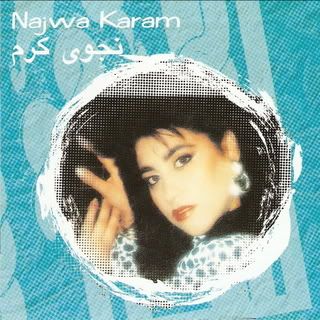
Najwa Karam - Rouh Rouhi

Rouh Rouhi is one of the songs that instantly come to mind when thinking of Najwa Karam's lengthy repertoire. The album opens with Atshaneh, which in the vein of Pascale Machaalani's Albi and Samira Said's Al Bal, has the distinct Indian flavor which was popular at the time. The remainder of the album is made up of more Lebanese-style dabke songs and ballads. Imad Shamseddine dominates most of the album, and composed the hit title song too. Wissam El Amir composed In Raddayt Alayk and Joseph Joha composed El Wafiyeh and Areftou Albi La Min, another heartfelt and unforgettable song. Like most of Najwa's late-1990s albums, Tarek Aakef arranged all of the songs.

Image and video hosting by TinyPic

1. Atshaneh
2. Areftou Albi La Min
3. Rouh Rouhi
4. Kif Bdawik
5. Ma Berda Ghairak
6. El Wafiyeh
7. In Raddayt Alayk

256 Kbps + Covers

Thursday, February 4, 2010

Mayada El Hennawi - Habbeina

Baligh Hamdi once said that Mayada El Hennawi's was "...an angelic voice that demands your attention." The great composer only wrote the lyrics to two songs in his musical career, and they both went to Mayada El Hennawi. She became a muse of sorts, and his last work, Andi Kalam, went to her also. After Mohamed Abdel Wahab's jealous wife had her barred from Egypt, Baligh traveled with his orchestra to Greece to record her songs, as did many of the top composers. Two of the greatest works Baligh Hamdi composed for Mayada are Habbeina (also known as Habbeina Wethabbeina), which is written by Abdel Rehim Mansour and Fatet Sana, written by Sayed Morsi. Habbeina (I've Fallen in Love) is a hopelessly romantic and upbeat tribute to newfound love, while Fatet Sana (A Year Has Passed) is a melancholic song about losing touch with a lover who is far away. The music is characteristic of ever-evolving 1970s-1980s Egyptian music, with a traditional oriental orchestra accompanied by a keyboardist, bassist, and guitarist.

Image and video hosting by TinyPic

1. Habbeina
2. Fatet Sana

256 Kbps + Covers

Sunday, January 24, 2010

Abo Bakr Salem - Ahtefel Bel Jarh

Love or hate him, Abo Bakr Salem has left his mark on the music of the Gulf. It is largely thanks to him that Yemenite music is still alive and well on the scene. Though the material here is all-new, the Egyptian chorus and orchestra, including Amir Abdel Majid and Tarek Aakef, is still here, and harkens back to the days when Arab singers all traveled to Cairo for the state-of-the-art studios. Abo Bakr is still as soulful as ever with his truly unique style, changing his tone and commenting for dramatic effect. The listener loses themselves in the oud, the ney, and the deep strings that accompany each song. The lyrics are as beautiful as ever too, with songs of pure affection like Moghram Sababa, of loss like Ahtefel Bel Jarh, or of peace like Han Wagt El Lega, which urges Arab nations to forget previous wrongs and come together, using estranged lovers as a metaphor. A great composer, lyricist, and singer, Abo Bakr Salem is unmatched, even when scores of singers now adhere to his school of music.

Image and video hosting by TinyPic

1. Ahtefel Bel Jarh
2. Moghram Sababa
3. Samir El Ein
4. Ghessin El Ban
5. Ya Badr
6. Gesher Men El Mouz
7. Han Wagt El Lega

256 Kbps + Covers

Sunday, December 13, 2009

Latifa - Atehadda

When news of Latifa's Khaliji album came to light, the air of skepticism was undeniable. Latifa has proven us wrong once again, however. After wowing audiences with Ziad Rahbani in 2006, and again with Egyptian pop in Fel Kam Youm Ell Fatou in 2008, Latifa has done it again. While Fella's Khaliji album had a Saudi focus, and Yara's an Emirati one, Latifa's has a Qatari one. As with her previous albums, Latifa tends to excel with slower-tempo songs and she has quite a few excellent ones here, as well as a number of genres. The album has Khaliji pop, like Mamlouh, Atehadda, Wesh Aad Endak, and Ma Yestahel. Then there are songs that mix genres. Einek Le Bara, the story of a lover with wandering eyes, has an interesting gypsy flavor. Ya Anani, arranged by Egyptian-born Ali Abaza, is closer to the Egyptian pop Latifa usually sings. Ana Men Nah Winta Men Nah, composed by George Marderosian, is a fun reminder of the composer's work in the 1990s. Kel Wahed, Ma Jeitni, and Habbeina Gheirah are heartfelt modern ballads, while Weinek Ta'al, Ya Sahrin El Leil and Sabberna Yalli Msabberna are rich, more traditional pieces. Latifa may not have mastered the accent as well as other singers this year, but the album is solid, albeit it could have done without some of the faster tracks.

Image and video hosting by TinyPic

1. Mamlouh
2. Einek Le Bara
3. Atehadda
4. Ma Jeitni
5. Ya Anani
6. Kel Wahed
7. Ana Men Nah Winta Men Nah
8. Wesh Aad Endak
9. Weinek Ta'al
10. Hallaftkom
11. Ya Sahrin El Leil
12. Habbeina Gheirah
13. Sabberni Yalli Msabberna

256 Kbps + Covers

Password: eftekasat.net

Saturday, November 21, 2009

The R.E.G. Project - Harem

Ralph Khoury, Elie Barbar, and Guy Manoukian are The R.E.G. Project. All established musicians in their own right, the trio fuses Arabic and world music with electronic and dance beats. Their music ranges from lounge to club music, and the album contains both remixed classics from Warda and Abdel Halim Hafez.

Image Hosted by ImageShack.us

1. Harem
2. Zay Al Hawa
3. Peace
4. Casa Del Sol
5. Batwannis Beek
6. Lost Love
7. Sayat Nova
8. Passion
9. Harem (Club Mix)
10. Harem (House Mix)

256 Kbps + Covers

Sunday, September 13, 2009

Nawal Al Zoghbi - Yama Alou

Nawal Al Zoghbi's return was ill-timed with the breakout of the 2006 Lebanon War, but Egyptian record company Alam El Phan insisted on releasing the album that was to headline their summer catalogue. Though she had only been gone for two years, during which she released the hit singles Rouhi Ya Rouhi and Shou Akhbarak, Nawal's presence was sorely missed. Following up an album like Eineik Kaddabin is hard enough, but Yama Alou was released in the same year Elissa and Nancy's hit albums Bastannak and Ya Tabtab Wa Dalla' were, and faced stiff competition. It did not meet with the commercial success they did, but Nawal's album is pure quality.

The majority of the album is arranged by Amir Mahrous, with strings by Yehia El Mougi, unless otherwise stated. The oddball title song, composed by Mohamed Rahim, is instantly a case of love-it-or-hate-it. Amir Mahrous' mix of pop, sha'bi, and tarab in the arrangement characteristic of his style, and the song has guitar, rebab, and ney, with an infectiously catchy tune. Habbaitak is a rather tame love song, composed by Tarek Abou Jaoudeh. El Assi is a more downbeat ballad composed by Mohamed Refai, and the heartfelt lyrics are his signature. The hit Aghla El Habayeb is another catchy song, composed by Haitham Zayyad and arranged in a beautiful classical Arabic style by Tony Saba. Aadi is the album's sole Khaliji song. Composed by Abdallah El Gaoud and arranged by Tarek Aakef, it is nothing groundbreaking, but her best effort at the genre so far. Bta'refni Ana, composed Tarek Abou Jaoudeh and arranged by Michel Fadel, is a harmonious love ballad and everything from Nawal's voice to the piano and the accordion seem to be perfect. Betes'al is more of a chillout oriental song, with romantic lyrics from Hani Abdel Karim and and beautiful music from Walid Saad and Amir Mahrous. Ghib Anni Ghib is a cover of Turkish singer Hande Yener's Sen Yoluna Sen Yoluma, composed by Altan Çetin and arranged by Jean-Marie Riachi. Though it simply feels like a refined version of Hande's original, the feelings communicated in the other songs seem to be absent here. Akher Marra is modern tarab song, with a melancholic oud, sublime strings, deep lyrics, and beautiful composition on Walid Saad's part. Shou Akhbarak, Nawal's first Lebanese hit in a very long time, is another beautiful ballad. Composed by Nicolas Saade Nakhle and arranged by Michel Fadel, the song also has an air of the classics while still sounding clear and modern. Ayzak, composed by Walid Saad, begins as a classic ballad and transforms into a catchy sha'bi-style song. The album ends with Nawal's chilling tribute to Abdel Halim Hafez's Habibati Man Takoun, written by Prince Khaled bin Saoud and composed by the great Baligh Hamdi.

Image and video hosting by TinyPic

1. Yama Alou
2. Habbaitak
3. El Assi
4. Aghla El Habayeb
5. Aadi
6. Bta'refni Ana
7. Betes'al
8. Ghib Anni Ghib
9. Akher Marra
10. Rouhi Ya Rouhi
11. Shou Akhbarak
12. Ayzak
13. Habibati Man Takoun

256 Kbps + Covers

Wednesday, May 27, 2009

Najwa Karam - Ya Habayeb

Ya Habayeb is Najwa's debut studio album. It was released in 1989, but this rip is from the second edition from 1995. This album is a great example of Najwa Karam's beginnings with composers she has not worked with in a long time now, such as Samir Sfair and Suhail Fares. Samir's style has changed considerably, and Najwa works primarily with Imad Chamseddine and Wissam El Amir nowadays. The album is very "Arabic", with tarab-style songs as well as dabke and mawals. It is definitely worth a listen.


1. Ya Habayeb
2. We Ygoulou Rjou'ou Garib
3. Khalli Ketfak A Ketfi
4. Ma Baddi Eyounak
5. De'i Ya Tboul
6. El Haq Alayeh
7. Baladiyat

Download Here
256 Kbps + Covers

Friday, March 20, 2009

Najwa Karam - Ma Hada La Hada

After the upbeat Hazzi Helou (I'm Lucky), Ma Hada La Hada (No One Belongs to Anyone) was a marked change of tone for Najwa Karam. The first single, El Tahaddi (The Dare) and the title song are defiant songs, rejecting love. The album was the beginning of a long creative relationship with Egyptian musician Tarek Aakef, who arranged the entire album. As always, he is diverse, using dabke, Khaliji, classic tarab, and modern beats and effects. The talented Wissam El Amir composed tracks 2, 4, and 6, while tracks 1, 3, and 7 are by Salim Salameh. Imad Shamseddine wrote and composed Baddi Mnajem (I Need an Astrologer). Despite being a sales failure, Ma Hada La Hada is without a doubt one of Najwa's most solid (and significant) albums.

Image Hosted by ImageShack.us

1. El Tahaddi
2. Habib El Zein
3. El Helou
4. Ma Hada La Hada
5. Baddi Mnajem
6. Btousaq Fiyeh
7. Bjarreb Ensa

Download Here

Saturday, March 14, 2009

Mayada El Hennawi - Na'met El Nesyan

Alongside songs like El Hob Elli Kan (Kan Ya Ma Kan) and Habbeina, Na'met El Nesyan is one of the great songs that established Mayada El Hennawi in the Egyptian music scene. The center of Arabic music at the time, Cairo was bustling with new Arab talent from all corners of the Middle East. Na'met El Nesyan roughly translates into "The Blessing of Forgetting". It is written by Omar Batiesha and composed by Farouq Salama, the accordionist who was became famous as a part of Oum Kalthoum's orchestra. The song is in the traditional tarab style, with a traditional strings, ney, and kanun orchesta, as well as the keyboard and bassline which added a touch of modernity back in 1982. Na'met El Nesyan is approximately 47 minutes long, typical of 1940s-1980s music.

Image Hosted by ImageShack.us

1. Na'met El Nesyan

Sunday, February 15, 2009

Magida el Roumi - Ibhath Anni

Like Kadim Al Sahir, Magida el Roumi is one of the few that truly succeeded in fusing Arabic and classical music together in the 1990s. Beautiful poetry, like Dr. Souad Al Sabah's Kon Sadiqi (Be My Friend), were turned into songs that spoke to Arab audiences from Oman to Morocco. After the huge success Magida experienced with Kalimat, she sang her second Nizar Qabbani poem, Ma'a Jarida, in 1994. While Dr. Jamal Salama's music is more engaging and interesting, Ihsan El Mounzer benefited from a much more romantic poem with 1991's Kalimat. Lan A'oud and Ghannou Ma'i are also composed by Dr. Jamal Salama, though the you can feel the classical influence in the former while the latter is an upbeat oriental song. Elie Choueiri's compositions, Saqata Al Qina' (The Mask Has Fallen) and Oum Etthadda (Dare), are both patriotic marches that call for resistance in the face of both internal and external threats. Magida's father, Halim, composed Mararti Fi Khayali and the album's sole Egyptian song, Ya Mkahal Remshak. The album's title song is a beautiful ballad in classical Arabic, and lyrics aside, Abdo Monzer does a an amazing job on the composition. Tracks 1-3 are arranged by Dr. Jamal Salama, while 4-9 are arranged by Abdo Monzer.

Image Hosted by ImageShack.us

1. Ma'a Jarida
2. Lan A'oud
3. Saqata Al Qina'
5. Mararti Fi Khayali
6. Ya Mkahal Remshak
7. Ibhath Anni
8. Kon Sadiqi
9. Oum Etthadda

Download Here
256 Kbps + Covers

Saturday, December 6, 2008

Mayada El Hennawi - Bayent El Hob Alaya

Syrian diva Mayada El Hennawi's 1993 album is a good example of popular music in the 1990s. The album starts off with the playful Bayent El Hob Alaya, the relatively short song (by 90s standards) is an accordion-infused Tarek Aakef composition. Alouli Ansa, which saw a dramatic resurgence in popularity when it was sampled on Aaliyah's More Than A Woman, is also composed and arranged by Tarek Aakef. Mahma Aghanni is a great example of the oriental style of saxophone playing, and Addemt El Rouh is a beautiful classically-influenced ballad. The lengthy Ma'ak Lel Nehaya closes the album on a relatively upbeat note. Once nicknamed Motrebet Al Jil (Singer of the Generation), Mayada's style, which borders on conversation, and her old-world grace, is what she is known for to this day.

Photobucket

1. Bayent El Hob Alaya
2. Alouli Ansa
3. Mahma Aghanni
4. Addemt El Rouh
5. Ma'ak Lel Nehaya

Download Here
320 Kbps + Covers

Friday, November 28, 2008

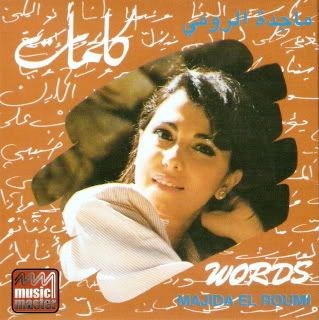
Magida el Roumi - Kalimat

Magida el Roumi's 1991 album was one of the most important in her career. Reissued several times, and with the iconic title song etched in the minds of Arab listeners everywhere, Kalimat set the stage for what was to come from this living Lebanese legend. Combining "the women's poet" Nizar Qabbani's beautiful poetry with Ihsan El Mounzer's beautiful fusion of classical and Arabic music, Kalimat is one of those songs you never forget. The great Mayada El Hennawi also talked about her love for this song when interviewed on Shako Mako.

Photobucket

1. Kalimat
2. Esma' Albi
3. El Iyam
4. Inta We Ana
5. Koullon Youghanni Ala Lailah
6. Beirut Set Eddounia

Download Here
256 Kbps + Covers

Wednesday, November 26, 2008

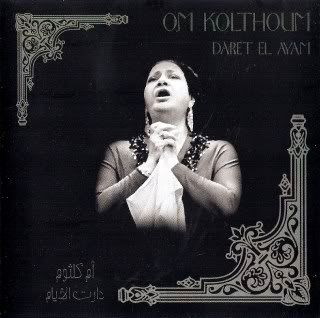
Oum Kalthoum - Daret El Ayam

Oum Kalthoum was not only a symbol of Egypt, but the symbol of a unified Arab world. Whether she sang classical poetry or in her native dialect, religious songs or patriotic songs, her voice was heard from Morocco to Oman. The young bedouin girl who simply came to sing in the big city not only became a milestone in Arabic music, but became the voice of Nasserism, of Arab unity. Though the dreams she and Gamal Abdel Nasser envisioned may have died with them, her music lives on and she remains Kawkab Al Sharq (Star of the East). Daret El Ayam, written by Ma'moun El Shennawi and composed by the great Mohamed Abdel Wahab, is one of Oum Kalthoum's most well-known songs. The song speaks of how years after two lovers parted, seeing each other awakened old emotions and made them forget why they ever parted. From the moment the melancholic accordion begins to play to the end, Daret El Ayam is a testament to the genius of Mohamed Abdel Wahab and the beauty of Oum Kalthoum's world.

Photobucket

1. Daret El Ayam

Download Here
256 Kbps + Covers

Sunday, November 16, 2008

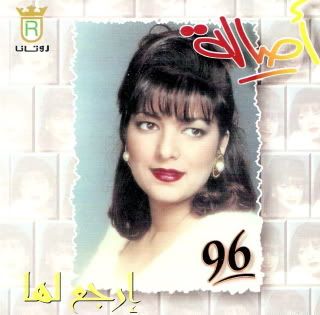
Asalah - Erga' Laha

Asalah's 1996 album is a mix of both light Egyptian pop songs, like Heya Keda and Khodni Ma'ak (Meshwar Hawak), and heavier, lengthy tarab songs like Erga' Laha and her popular rendition of Alli Gara. The album is composed by Mohamed Diya', Helmi Bakr, Amir Abdel Majid, and the great Sayed Mekkawi.

IPB Image

1. Heya Keda
2. Shi' Yerga'lak
3. Alli Gara
4. Katabtak
5. Khodni Ma'ak (Meshwar Hawak)
6. Erga' Laha

Download Here
256 Kbps + Covers

Monday, November 10, 2008

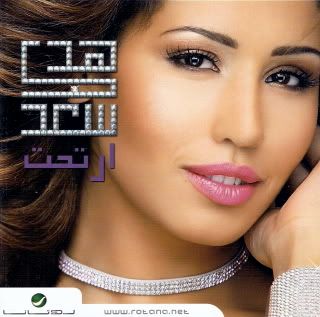
Hoda Saad - Ertaht

Moroccan singer Hoda Saad's debut album is a mellow, mostly traditional one. Hoda skillfully sings in the Egyptian, Lebanese, and Khaliji dialects, as well as her native Moroccan dialect. Hoda's soft, feminine voice does not instantly distinguish itself, but it is good and well-employed throughout the album. Hoda works with some of the top names in the business, including Walid Saad, Salim Salameh, Mahmoud Khayami, and Mohamed Rifai. Looking like Egyptian songstress Sherine can't hurt either.

Photobucket

1. Ma Kontesh
2. Ma Sadda'
3. Maghroumeh Fik
4. Abou El Erreif
5. Jit Nsidou
6. Ma Tfakkarnish
7. Ma Baddak
8. Ertaht Ashan Nesitni
9. Allah Yaster

Download Here
256 Kbps + Covers

Saturday, November 8, 2008

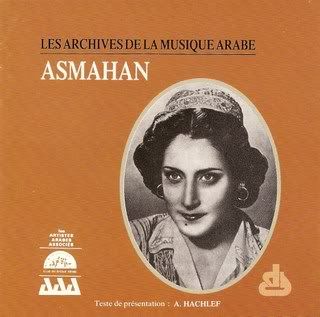
Asmahan - Les Archives De La Musique Arabe

Born Amal Al Atrache to Syrian Druze nobility, Asmahan's life was almost as interesting as her sublime voice. Asmahan's father, Fahd Al Atrache, was the governor of the Demirci district in Ottoman Turkey. After Turkey lost Syria to the French, the Atrache family fled fearing Turkish retribution and Asmahan was born on the ship that took them back to Syria. Having lost their wealth, Asmahan's mother was forced to sing for a living and became young Asmahan, and her brother Farid's inspiration. One of the earliest singers to introduce the western influence to Arabic music, Asmahan's voice excelled at almost anything. Though Farid lived quite a long life and became a legendary singer, actor, and composer, Asmahan was not so lucky. Her mysterious death in Egypt was blamed on the intelligence wars of the time, and it was rumored she was a spy. Other more ridiculous conspiracy theories account even accused Oum Kalthoum of having her murdered "to kill off the competition". This is a compilation of Asmahan's greatest songs, and even includes Ya Habibi Ta'ala and Layali El Ons, which are still concert favorites to this day.

Photobucket

1. Aleik Salat Allah
2. Layta Lel Barqi
3. Farraq Ma Beinna
4. Naweit Adari
5. Layali El Bashar
6. Ash'inha
7. Layali El Ons
8. Ya Habibi Ta'ala

Download Here
256 Kbps + Covers

Monday, October 20, 2008

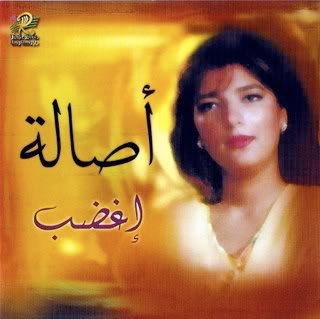
Asalah - Ighdab

Ighdab marked Asalah's first (and only) collaboration with the great Syrian poet Nizar Qabbani. The title song, which is composed by Helmi Bakr, is a lengthy qasida, and stylistically very different than the first four tracks, which are composed by Mohamed Diya'eddin. The poem talks of an angry lover, and how his anger and attempts to hurt her will not make her falter, "for you are like a child, we love children no matter how they hurt us... And without waves, there would not be seas." Law Alf Ahebbak and Batthadda Eyounak are typical 1990s Egyptian maksoum songs with a synth, fast percussion, accordion, a bass line and little in the way of musical innovation. Magrouh Sout El Sa'at and Ma Tes'alnish are both slower, Egyptian ballads.

Photobucket

1. Law Alf Ahebbak
2. Ma Tes'alnish
3. Batthadda Eyounak
4. Magrouh Sout El Sa'at
5. Ighdab

Download Here
256 Kbps + Covers

Monday, October 13, 2008

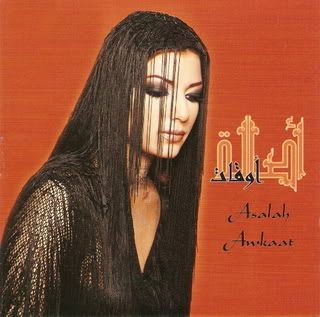
Asalah - Awgat

Though Asalah had sung in the Gulf/Khaliji dialect numerous times before, she never experienced success with it at the scale of Awgat in 2004. Unlike her 2007 effort, the approach she took was extremely traditional, with the most foreign instruments in most of the songs being the odd synth and the focus in the majority of the songs being on the poetry. The album opens with the upbeat Tawwek Ala Bali and the hit Meta Ashoufek. Rawweh Ou Rouh is in Fayez El Sa'id's usual style, but stretches Asalah's vocals much more than Tawwek Ala Bali. Ya'coub Al Khubaizi's Ma Tewaqa't and Afwan, take a completely different route partly thanks to Egyptian arranger Amr Abdulaziz, who even incorporated clarinet into Afwan. Gemarhom Kellehom is an upbeat song about a jealous lover, that also became a successful single. Remsh El Ghala and La Salam pick up the pace again with faster and stronger percussion, though with a different feel than the first tracks on the album. Terfa' Jebinek, composed by Abdallah El Go'oud and arranged by Tarek Aakef, is slightly more relaxed but works in a lot more synth, in the arranger's signature style. Ma Gedar, another Khubaizi composition, starts like a slow pop song and then jumps into the traditional Khaliji beats. Awgat, composed by Mohamed Abdu and arranged by his Egyptian protégé Walid El Fayed, takes a completely different tone and feels like one of Abdu's own grand classics when it transitions from one style to another. Sadeq El Sha'er's beautiful Yes'ed Sabahak, a fifteen-minute ballad in the traditional Arabic tarab style, closes the album in the best way possible.

Photobucket

1. Tawwek Ala Bali
2. Meta Ashoufek
3. Rawweh Ou Rouh
4. Ma Tewaqa't
5. Gemarhom Kellehom
6. Afwan
7. Remsh El Ghala
8. La Salam
9. Terfa' Jebinek
10. Ma Gedar
11. Awgat
12. Yes'ed Sabahak

Download Here
256 Kbps + Covers